
Stepping into a Reliance Digital store is like entering a tech wonderland—the bright lights, the rows of shimmering OLEDs, and the helpful staff in blue shirts. But as any seasoned shopper knows, not everything that glitters under those LED spotlights is a good deal.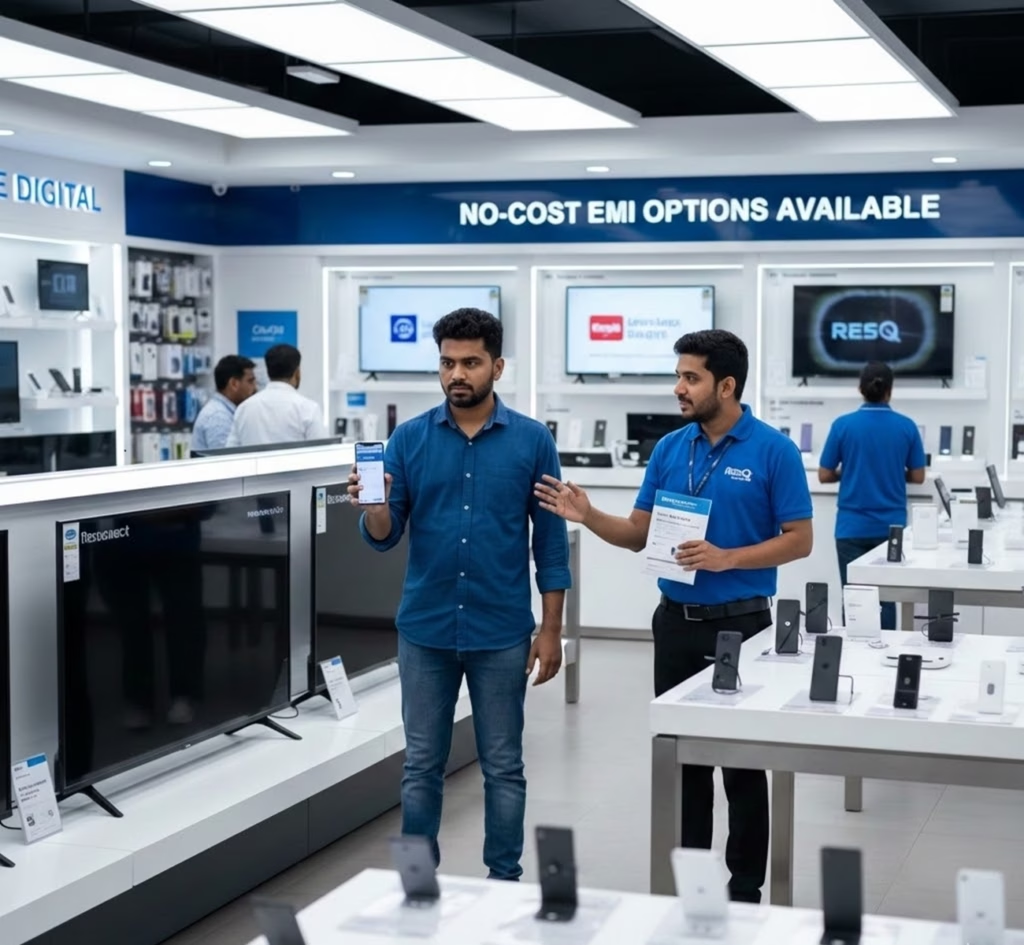
In 2026, the tech landscape has shifted. With AI integration becoming standard and the Union Budget affecting import duties, your buying strategy needs an upgrade. Whether you’re at the Mall of India or browsing reliancedigital.in, here are 8 gadgets you should probably skip to save your wallet (and your sanity).
1. The “Checkout Counter” Cables and Dongles
We’ve all been there. You’re buying a flagship phone, and the salesperson suggests a “high-speed” charging cable or a 3.5mm adapter at the billing counter.
- Why avoid: These are often high-margin, generic items marked up significantly. You can find the same (or better) MFi-certified or Braided USB4 cables online for 40% less.
- The Pro Move: Buy your peripherals from trusted third-party brands on Amazon or Flipkart before your big store visit.
2. Reconnect (Private Label) Entry-Level TVs
Reconnect is Reliance’s in-house brand. While they offer tempting prices, the long-term value is often shaky.
- Why avoid: User reviews frequently highlight issues with panel longevity and sluggish software updates. In 2026, where OS-level AI features are key, these budget panels often struggle to keep up.
- The Better Bet: Stick to brands like Xiaomi, TCL, or even entry-level Samsung/Sony models for better after-sales support and panel quality.
3. Laptops with “Last-Gen” 8GB RAM
You’ll often see “Great Deals” on laptops that look sleek but are rocking 8GB of non-expandable RAM.
- Why avoid: In the 2026 era of “AI PCs” and local LLM processing, 16GB is the new minimum. Buying an 8GB machine today is like buying a car with three wheels—it’ll move, but you’re going to have a bad time very soon.
- Check the Specs: If the RAM isn’t DDR5 and at least 16GB, walk away.
4. Non-Matter Compatible Smart Home Hubs
Reliance Digital still stocks older inventory of smart bulbs and hubs that use proprietary protocols.
- Why avoid: The industry has moved to the Matter standard. If your “smart” gadget doesn’t have the Matter logo, it likely won’t play nice with your future devices or Apple/Google/Amazon ecosystems.
- Look For: The “Matter” or “Thread” logo on the box.
5. Budget “Smart” Rings (The 2026 Gimmick)
Smart rings are the “it” gadget this year, and physical stores are pushing them hard.
- Why avoid: The budget versions (often sold under generic names) have notoriously poor sensors and clunky apps. Unlike a smartwatch, a bad smart ring is just a bulky, expensive piece of plastic that gives you “estimated” heart rates.
- Wait For: A sale on established players like Oura, Ultrahuman, or Samsung.
6. Offline-Exclusive “M” or “F” Series Phones
Samsung and other brands often launch store-exclusive variants that look identical to their online “A” or “S” counterparts but have slightly nerfed processors or slower storage.
- Why avoid: You’re often paying the “store premium” for a device that is technically inferior to the online-first models.
- The Hack: Always pull up a quick comparison on your phone between the store model and its online equivalent while standing in the aisle.
7. The ResQ “Basic” Extended Warranty
The sales team is trained to sell you ResQ plans. While the “Premium” accidental damage protection has its fans, the “Basic” extended warranty can be a headache.
- Why avoid: Numerous customer reports cite long turnaround times and “part unavailable” excuses. In many cases, the Manufacturer’s Extended Warranty is more reliable and easier to claim at authorized service centers.
- Pro Tip: Ask for the brand’s official warranty extension price first.
8. Last-Year’s Flagship “Display Units”
Stores often offer “massive discounts” on the previous year’s OLED TVs or flagship phones that have been sitting as display units.
- Why avoid: A display TV has likely been running at maximum brightness for 12 hours a day, 7 days a week. For OLEDs, this is a recipe for burn-in or panel degradation that you might not notice until you get it home.
- The Rule: Unless the discount is 60%+, it’s rarely worth the risk of a “tired” panel.
Final Thought
Reliance Digital is great for “touch and feel” and No-Cost EMI deals, but don’t let the convenience cloud your judgment. Always check the “Online Price Match”—even if they won’t match it, it gives you leverage to ask for a freebie like a laptop bag or a soundbar.
At the end of the day, Reliance Digital is a fantastic place to “test drive” tech. There is nothing like feeling the keyboard travel on a premium laptop or seeing the true blacks of an OLED screen in person. But in 2026, being a savvy shopper means using the store for its strengths—hands-on experience and instant gratification—without falling for the high-margin traps.
Don’t let the bright lights and “Limited Time Offers” rush you into a purchase you’ll regret by the time you reach the parking lot. Use your phone to cross-check specs, ignore the pushy upsells, and remember: The best deal isn’t the one that saves you 10% today; it’s the one that still works perfectly three years from now.
What’s your take? Have you ever scored a legendary deal at Reliance Digital, or did you get stuck with a “Reconnect” gadget that gave up the ghost too soon? Drop your stories in the comments below—let’s help each other shop smarter!






Leave a Comment
You must be logged in to post a comment.