
In everyday SUV use, space often feels adequate until real situations start to test it. A planned trip or an unexpected detour can quickly change how much storage is actually needed.
This is where the balance between expectation and real usability becomes important. The Duster’s boot space sits in this practical space, where flexibility and convenience matter as much as overall capacity. It is designed to support shifting needs without making storage feel restrictive or complicated to manage.
Before exploring how it adapts across different driving situations, it is worth understanding why boot space plays such a key role in shaping the everyday SUV experience.
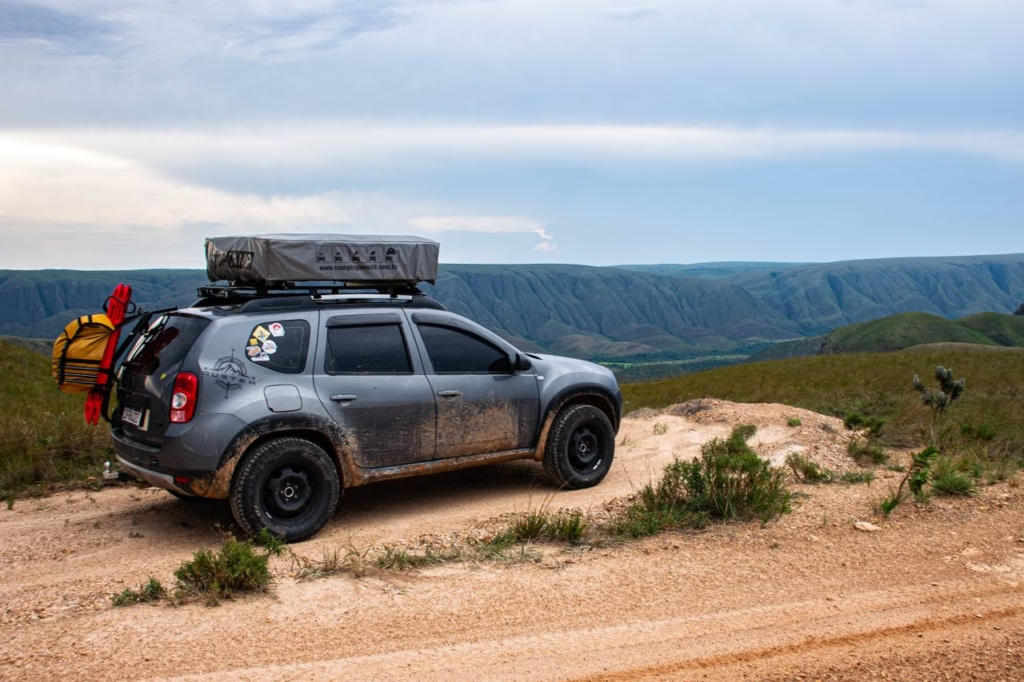
How Boot Space is Measured in Cars?
Boot space in cars is measured in litres, which represents the total usable volume available for luggage inside the storage area. This measurement is based on how much space can physically be filled when the cargo area is fully utilised.
In most SUVs, boot space is calculated in two standard ways. The first measurement considers the storage area with the parcel shelf in place, which reflects a more structured and everyday usage setup. The second measurement accounts for full loading up to the roof, which represents maximum possible capacity when no vertical restrictions are applied.
Manufacturers determine this volume using standardised loading methods, often filling the space with uniform blocks or equivalent volumetric tools to calculate total capacity. This ensures a consistent way of representing storage size across different vehicles.
How is the Duster’s Boot Space Designed for Real-world Usability?
The Duster’s boot space is shaped around how people actually use an SUV in daily conditions, where convenience matters as much as capacity. Instead of focusing on design for specification alone, the layout prioritises ease of loading, movement of luggage, and practical arrangement of different item types.
The wide boot opening makes it easier to place larger bags without awkward lifting angles, while the depth of the space supports structured stacking for mixed luggage. This becomes especially useful when usage shifts from small daily items to heavier or bulk-packed requirements.
The overall design focuses on reducing friction during loading and unloading. This ensures the space feels intuitive regardless of how frequently it is used or how it is packed.
What Does the Duster’s Boot Space Offer Compared to Other Compact SUVs?
In the compact SUV category, boot space differs mainly based on how much of the rear area is dedicated to passenger comfort versus luggage storage. Some SUVs prioritise rear-seat room, which reduces luggage capacity, while others allocate more space for cargo use.
The Duster’s boot space provides 518L of storage with the parcel shelf fitted, which is suitable for everyday luggage such as shopping bags, backpacks, and small suitcases. When the parcel shelf is removed, and space is used up to the roof, the capacity increases to 700L, allowing larger suitcases and bulk travel luggage to fit in a single load.
This difference allows the Duster to handle two clear usage requirements: regular daily storage and expanded travel packing. The loading area is designed so luggage can be placed directly without complex rearrangement, making it easier to use the full available space when required.
Unlike setups that require frequent seat adjustments for basic cargo needs, the Duster allows direct use of the rear storage area for both standard and extended loading conditions.
Smart Packing Techniques to Maximise Duster’s Boot Space
Making the most of the Duster’s boot space depends on how efficiently the available area is used. A few simple packing habits can improve both space usage and accessibility during travel.
- Use soft-sided bags instead of rigid suitcases for better flexibility and easier stacking.
- Place heavier items at the bottom to create a stable base for the luggage load
- Keep frequently needed items near the top or outer layer for quick access
- Fill smaller gaps with compact items like accessories or travel essentials
- Use vertical stacking wherever possible to maximise usable height
- Fold rear seats when carrying longer or bulkier items that need extended space
- Maintain even weight distribution to keep the load stable during movement
These simple techniques help the storage area feel more organised and usable, especially when travel requirements change from one trip to another.
Check Out Renault Duster for Smarter Storage and Travel
The Renault Duster is built for users who expect their SUV to adapt easily to changing daily and travel needs without adding complexity to storage use. The Duster’s boot space reflects this approach, where practicality is built into how the space is accessed and used across different situations.
For drivers who regularly move between city routines and longer journeys. The value lies in storage that naturally accommodates both light and heavy packing requirements. Instead of adjusting plans around limitations, the Renault Duster lets storage align with actual usage patterns. To experience this balance in everyday driving, the next step is to explore the Renault Duster and see how it fits your personal mobility needs.






Leave a Comment
You must be logged in to post a comment.