
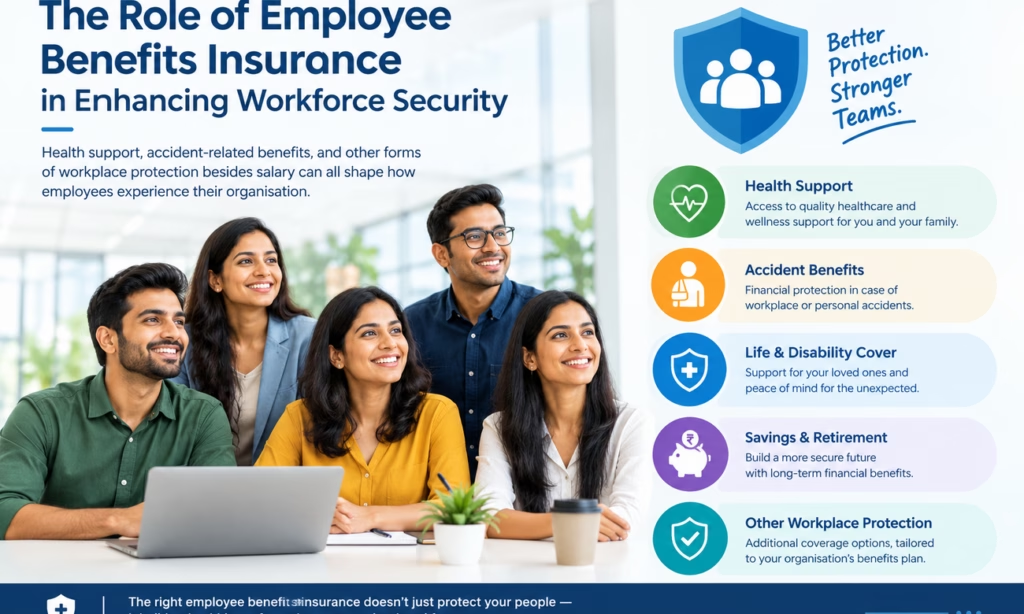
Health support, accident-related benefits, and other forms of workplace protection besides salary can all shape how employees experience their organisation. This is where employee benefits insurance can fit into an employer’s wider benefits approach. Depending on the arrangement, different types of insurance may be made available to eligible employees, subject to the applicable policy terms, conditions, and exclusions.
What Does Employee Benefits Insurance Cover?
Employee benefits insurance is a broad term that can refer to insurance arrangements provided by an employer for eligible employees. Depending on the policies selected, these arrangements may relate to health, accidents, life events, or employee compensation requirements.
The exact scope varies between policies. For an employer, this makes it important to look beyond the name of a cover and understand its eligibility requirements, limits, exclusions, and other applicable conditions.
A workers’ compensation policy may also be relevant where applicable laws create compensation requirements relating to specified workplace injuries or occupational circumstances. The relevant law and policy wording should be checked to understand the applicable provisions.
Which Types of Employee Cover Could Be Considered?
Different forms of insurance address different areas, so it helps to look at them separately rather than treating employee benefits as one single type of cover.
| Policy Type | Area It May Relate To |
| Group health policy | Health-related benefits for eligible employees, subject to policy terms |
| Workers’ compensation insurance | Applicable employee compensation requirements relating to specified workplace circumstances |
| Group personal accident policy | Benefits relating to specified accidental events, subject to the policy |
| Group term life policy | Benefits that may be payable to eligible beneficiaries following a covered event |
The exact benefits, exclusions, limits, and eligibility conditions can vary. This is why the relevant policy documents should be used when assessing specific cover.
How Can Employers Assess Their Employee Benefits Needs?
Your workforce may include people with different roles, work environments, and employment requirements. A useful review can therefore begin with the nature of your business rather than with a particular insurance product.
Consider these areas:
- Employee roles: Look at the different responsibilities within your workforce and the environments in which employees work.
- Business activities: Consider the nature of your operations and any applicable employee-related requirements.
- Workforce profile: Employee categories, age groups, and other characteristics may be relevant when reviewing available benefits.
- Legal obligations: Check whether applicable laws create specific requirements relating to employee compensation.
- Policy conditions: Review eligibility, limits, exclusions, waiting periods, deductibles, and other terms before selecting coverage.
How Can You Keep Employee Benefits Relevant as Your Business Changes?
Employee benefits may need to be reviewed when your workforce or operations change. New roles, additional locations, changes in employee numbers, or shifts in business activities can all affect the areas you need to consider.
Keep the review focused on these things:
- What benefits are currently available?
- Who is eligible under each arrangement?
- What conditions, limits, and exclusions apply?
Clear communication also matters. Employees should have access to the relevant policy information so they can understand the benefits available to them and the conditions that apply.
Conclusion
Employee benefits are not limited to salary and leave alone. Insurance can form another element of the overall benefits offered by an organisation, with different covers addressing different areas of employee and business requirements. A workers’ compensation policy may be relevant where applicable statutory requirements arise, while other employee benefits insurance arrangements may address health, accident, or life-related needs. Reviewing the relevant policy documents and keeping employee information up to date can help you understand the arrangements currently in place.


Leave a Comment
You must be logged in to post a comment.