
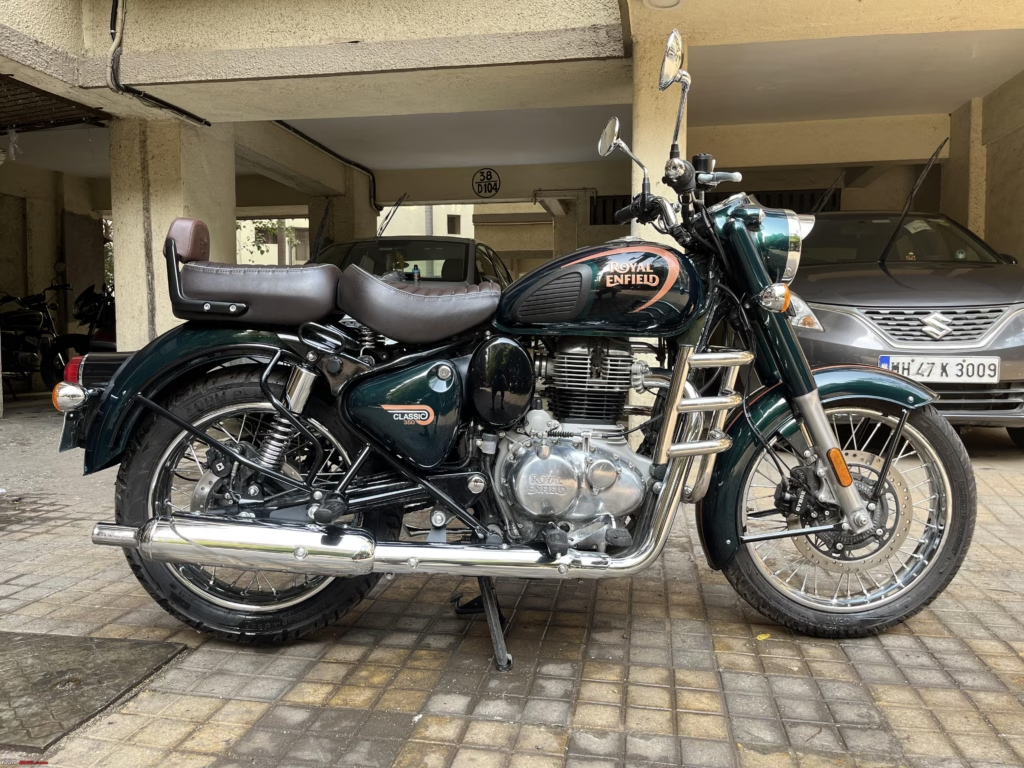
There is a moment, usually on a quiet early-morning ride, when you realise you are not merely travelling. You are settling into a rhythm. The steady beat from the exhaust and the easy posture make you ride a little more calmly. That is why Royal Enfield Classic 350 owners speak about years, not months. The real story is how the bike keeps feeling solid with time, if you stay ahead of rust, service it on schedule, and budget for upkeep.
The bond you build on day one
A Classic is rarely a purely logical purchase. The stance feels planted at city speeds, the ergonomics are relaxed, and the bike encourages you to slow down. After a few months, it stops being “new” and starts being “yours”, with familiar routes, fuel stops, and weekend meets turning into routine.
What ‘quality’ feels like after thousands of kilometres
Quality on a long-term motorcycle is not one dramatic moment. It is the repeatability. The starter works on a rushed weekday. The clutch stays predictable in traffic. The engine feels calm. With the Royal Enfield Classic 350, riders often describe one key sign: it still feels “together”. Panels sit right, the ride remains composed, and the bike does not develop new, worrying noises every few weeks. When a motorcycle holds that feeling, you trust it for another season of daily riding.
Rust in Indian weather, and how owners stay ahead
Rust does not care how gently you ride. Monsoons, coastal air, and hard water can start the slow work on bolts, welds, and plated parts. If your Royal Enfield Classic 350 has chrome, the shine demands extra care, but even painted parts benefit from routine care.
Simple habits, repeated, usually do more than expensive products.
- Wash the bike when the engine is cold and avoid aggressive high-pressure sprays near electricals and bearings.
- Dry it fully, then lubricate cables and the drive chain after rain rides or washing.
- Use a light polish or wax on painted and plated surfaces, and apply anti-rust protection only to plated parts.
- Cover the bike only after it is dry, and avoid trapping moisture under a wet cover.
Many warranty documents treat cosmetic ageing, including rusting on plated parts, as wear and tear. Prevention tends to be cheaper than restoration.
Service routine: the rhythm that keeps it consistent
A motorcycle that feels built to last is usually one that is serviced on time. With the Royal Enfield Classic 350, you can expect an early first service, followed by periodic services typically scheduled by kilometres and months. Many owner guides and dealer schedules revolve around a first visit within the first few hundred kilometres, then regular check-ups roughly every 5000 km or about six months, depending on usage.
A typical periodic visit focuses on engine oil, filters, chain inspection and adjustment, brake checks, tightening, and a scan for leaks. Service booklets also commonly include free services where labour may be waived, but consumables are billed, followed by paid services.
Between services, riders who keep costs under control usually watch tyre pressure, chain slack, and brake feel. That alone can prevent a small issue from turning into a bigger bill. Keep every service invoice, because it supports warranty queries and makes resale discussions simpler and fairer later.
Maintenance cost in India: an honest, useful estimate
Costs are easier when you think in ranges, not promises. For the Royal Enfield Classic 350, routine service bills can vary by city, workshop, riding conditions, and what you replace that day. If you add accessories, pick genuine parts and ask for the old parts back, which keeps costs transparent over time.
- Routine services: If you only do basics, many owners see per-visit totals around ₹1800 to ₹3500. This usually covers engine oil, an oil filter, inspection, and standard labour.
- Small wear items: Public spare parts lists often show brake pads, air filters, spark plugs, cables, and brake fluid in the hundreds of rupees per part. Taxes and labour add to the final number, but these are usually manageable if you replace them before they fail.
- Big wear items: Tyres, a battery, and chain-sprocket sets are occasional but heavier. Depending on brand and fitment, a tyre set can sit roughly in the ₹6000 to ₹12000 range, and a battery can be around ₹2000 to ₹4000. If you do a long highway season, you may reach these sooner.
- Rust and finish care: Chain lube, polish, wax, microfibre cloths, and a good cover can add ₹1000 to ₹3000 across a year, more if you are particular about chrome and cleaning.
In total, many riders budget roughly ₹6000 to ₹15000 a year for maintenance and care in regular use, with tyre or battery years costing more. Keep a buffer for surprises, especially if you ride through monsoon months or on rough roads.
The engineering that supports long-term ride quality
After the emotions, the hardware matters. The current Royal Enfield Classic 350 uses a 349cc air-oil-cooled, fuel-injected single tuned for torque and steady cruising. A 5-speed gearbox keeps it relaxed, while dual-channel ABS adds confidence when roads turn unpredictable.
The set-up is aimed at Indian realities: telescopic 41 mm front forks, twin rear shocks with preload adjustment, 19-inch front and 18-inch rear wheels, and a substantial kerb weight. In day-to-day ownership, that usually translates to stability, comfort, and a motorcycle that does not feel fragile when the road surface gets messy.
Ownership experience: quality is also people and parts
The long-term experience of a Royal Enfield Classic 350 is not only about the motorcycle. It is the ecosystem around it. Authorised workshops, independent specialists, local spares markets, and rider clubs all shape how easy it is to keep the bike healthy.
When parts are accessible, and your service records are clean, age becomes a badge, not a worry. You take pride in the details: a chain that stays clean, paint that still looks deep, and chrome that survives a wet season because you stayed disciplined.
Conclusion
A Classic lasts because you treat it like a companion, not an appliance. The Royal Enfield Classic 350 can feel reassuring year after year when you stay ahead of rust, follow the service rhythm, and budget for upkeep as a normal part of ownership. The reward is the confidence to take the long way home, again and again.






Leave a Comment
You must be logged in to post a comment.