
How is work CNAP displays verified caller names via telecom networks, while Truecaller identifies and blocks spam with community data.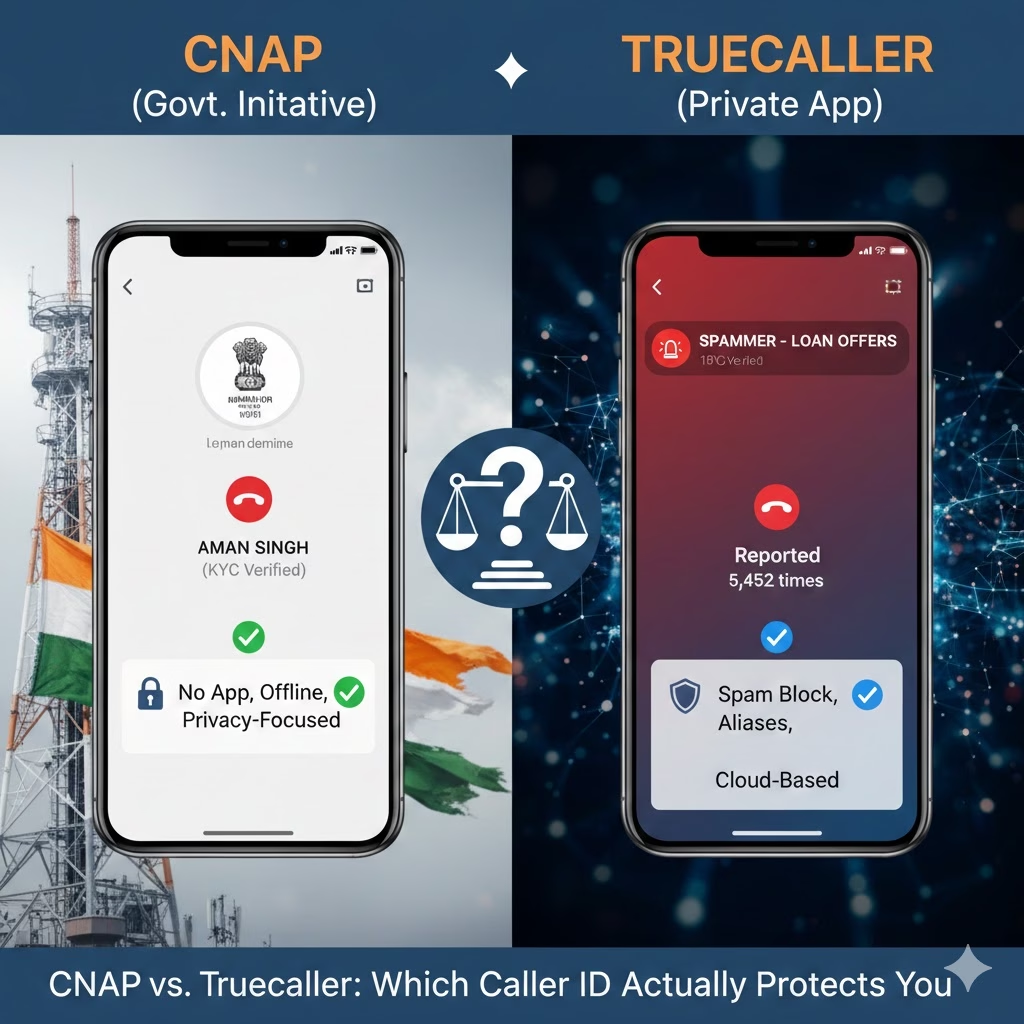
The introduction of Caller Name Presentation (CNAP) by TRAI is a significant shift in India’s telecom landscape. While it may seem like a “Truecaller killer” at first glance, the two services actually operate on different philosophies and offer distinct levels of protection.
1. The Core Difference: KYC vs. Crowdsourcing (CNAP vs Truecaller: Key Differences Explained)
The fundamental difference lies in where the names come from:
| Feature | TRAI’s CNAP | Truecaller |
| Data Source | KYC-Verified: Uses the name on the official identity documents (Aadhaar, etc.) provided during SIM purchase. | Crowdsourced: Uses names as saved by other users in their contact lists. |
| Accuracy | Extremely high for legal identity, but may be outdated if a SIM is used by a family member. | Varies; can show nicknames, “Spam,” or even funny/offensive names. |
| Requirements | Network-level (works on any phone, no app or internet needed). | Requires an app, data connection, and several privacy permissions. |
2. Is Truecaller Becoming Obsolete?
Not exactly. While CNAP tells you who is calling, Truecaller tells you why they are calling.
- Spam & Fraud Detection: CNAP does not identify spam. It will simply show the name of the telemarketer or scammer as registered in their KYC. Truecaller’s “Red” screen and community-based spam reporting remain its biggest competitive advantages.
- Advanced Features: Truecaller offers call blocking, “Reason for Call,” AI-powered assistant features, and professional profiles for businesses that CNAP cannot match.
- The “Verified” Problem: A scammer using a SIM registered to a random individual will appear as that individual on CNAP. Truecaller’s community might have already flagged that number as “Bank Scam,” providing better protection.
3. Privacy: The Double-Edged Sword
CNAP is being hailed as a win for privacy because it doesn’t require “uploading your contacts” to a third-party server. However, it introduces a new concern: forced disclosure.
- Every time you call someone, your legal KYC name is shared automatically.
- While there is a “Calling Line Identification Restriction” (CLIR) option to opt out, its implementation by telcos remains to be seen.
4. Rollout Timeline & Compatibility
- Status: As of early January 2026, CNAP is in a phased rollout.
- Availability: Major telcos like Jio, Airtel, and Vi have begun pilots in specific circles (e.g., Maharashtra, Tamil Nadu).
- Target: The Department of Telecommunications (DoT) has set a deadline for a pan-India rollout by March 31, 2026.
- Device Support: While it works on 4G/5G networks, older feature phones may require software updates or hardware compatibility which might limit initial reach.
The Verdict for Your Readers
For the average user, CNAP provides a clean, built-in baseline for identification without the bloatware of third-party apps. However, for those who are frequently targeted by spam calls, Truecaller will likely remain a necessary secondary layer of defense.
CNAP vs. Truecaller: Which Caller ID System Actually Protects Your Privacy?
Anonymity: Can you stay hidden?
This is where CNAP is more “invasive” for the caller.
- CNAP: By default, your official KYC name (from your Aadhaar/ID) flashes on the screen of anyone you call. If you are calling a stranger, a delivery person, or an office, they see your legal name instantly.
- Truecaller: You can choose a pseudonym or “alias.” If you don’t want people to see your real name, you can change it in the app.
Privacy Winner: Truecaller. It allows for a layer of social anonymity that CNAP currently removes by forcing official identity disclosure.
The End of Fake Names? How CNAP Uses Official KYC to Stop Spoofing.
Security Risks
CNAP Risks: The primary concern is identity leakage. If a woman calls a stranger, her full legal name is exposed, which could lead to harassment. Additionally, if telco databases are breached, the link between legal identities and active numbers is a goldmine for hackers.
Truecaller Risks: The risk is third-party data monetization. Truecaller is a commercial entity. While they claim to protect data, they have historically used it for ad-targeting and “verified business” services.
Summary: Which should you choose?
- Choose CNAP if: You are a “Privacy Purist.” You don’t want apps reading your contacts or tracking your location, and you trust the government/telcos more than a private Swedish company.
- Choose Truecaller if: You are a “Security Realist.” You care more about spam protection than your name being in a database. You prefer the ability to use a nickname and want the app to block scammers automatically.






Leave a Comment
You must be logged in to post a comment.