
While a single charger feels insignificant, the cumulative “phantom load” is a major target for global energy agencies.
We’ve all been there: you unplug your phone in the morning, but the charging brick stays firmly planted in the wall outlet. Maybe you’ve heard the rumors that these “vampire” devices are quietly hiking up your electricity bill while you’re at work.
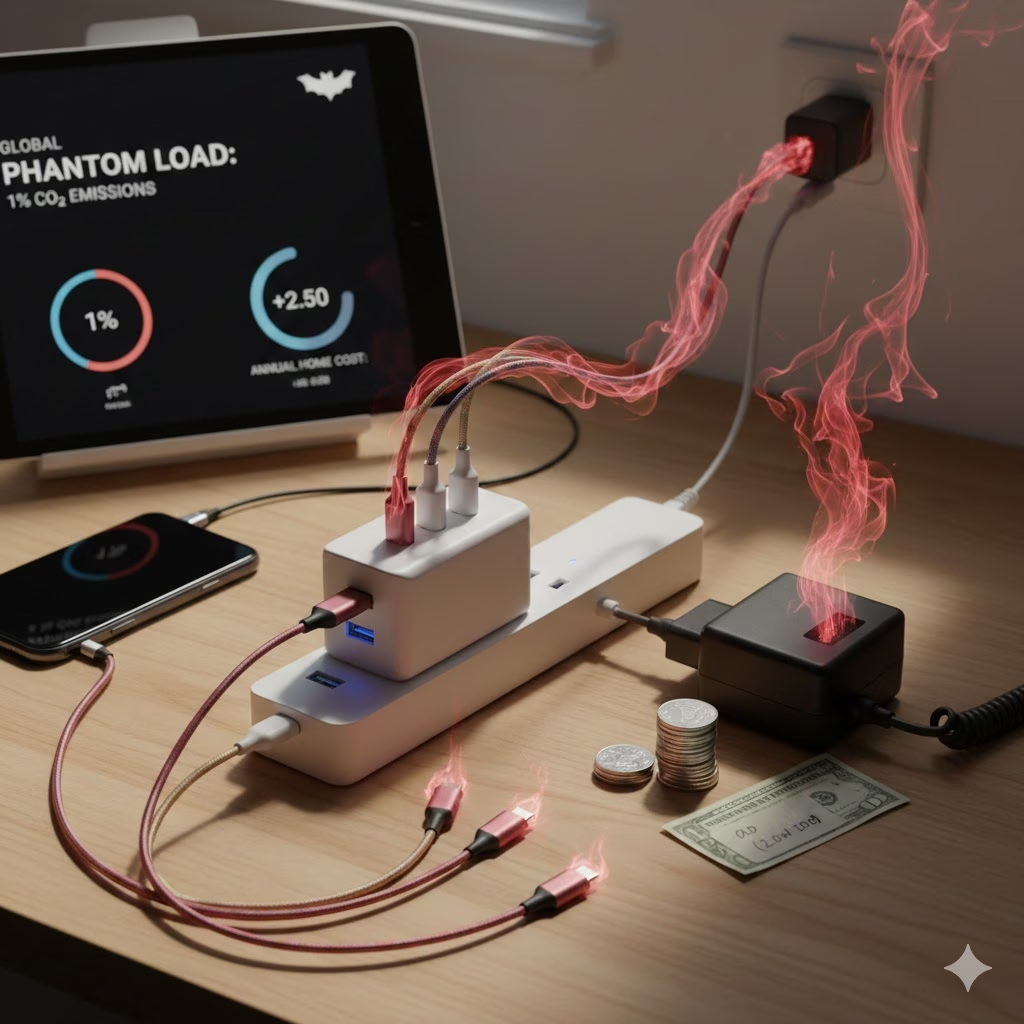
But is it actually true? Do unused USB chargers really waste electricity, or is it just an urban legend?
The Short Answer: Yes, But…
Technically, yes. If a charger is plugged into the wall, it is consuming power, even if there’s no phone attached to the other end. This is known as “Phantom Load” or “Vampire Power.” Inside that little plastic cube is a transformer that converts the high-voltage electricity from your house into the low-voltage power your phone needs. That circuit stays “on” as long as it’s plugged in.
The Numbers: Is it Worth the Worry?
Before you go sprinting around your house to unplug every cable, let’s look at the actual cost. Modern chargers (made in the last 5–10 years) are incredibly efficient.
- A single phone charger draws roughly 0.1 to 0.3 Watts of power when idle.
- If you leave it plugged in for an entire year, it will cost you roughly $0.25 to $0.50.
| Charger Type | Idle Power Draw (Watts) | Est. Annual Cost (USA) |
| Standard Phone Charger | ~0.1W – 0.3W | $0.15 – $0.45 |
| Fast Charger (18W+) | ~0.2W – 0.5W | $0.30 – $0.75 |
| Laptop Power Brick | ~0.5W – 1.0W | $0.75 – $1.50 |
| Cheap/Generic Charger | Up to 2.0W | $3.00+ |
To put that in perspective, you’d have to leave about 20 chargers plugged in for a year just to buy yourself one fancy latte at the end of it.
- Idle Power Draw: Modern high-quality chargers (certified under DOE Level VI or COC Tier 2 standards) are required to draw less than 0.075W to 0.1W when idle.
- Annual Cost per Charger: At an average U.S. electricity rate of roughly $0.17 per kWh, one charger left plugged in 24/7 costs approximately $0.15 per year.
- The Household Multiplier: By 2026, the average household has increased its number of connected chargers to roughly 12–15 devices (including phones, tablets, smartwatches, laptops, and smart home hubs). This brings the “vampire cost” to about $2.00–$3.00 per year per home.
2. GaN vs. Silicon: The Efficiency Leap
The biggest change in charging tech recently is the move from Silicon (Si) to Gallium Nitride (GaN).
- Efficiency: Traditional silicon chargers are roughly 85% efficient, meaning 15% of the power is lost as heat. GaN chargers boast efficiencies up to 95–96%.
- Standby Power: GaN semiconductors can switch at higher frequencies, allowing the internal components (like transformers and capacitors) to be much smaller. This reduces the “leakage” of electricity when the device is idle compared to older, bulkier bricks.
- Heat Signature: If a charger is warm to the touch while not charging, it is likely an older silicon model wasting energy. GaN chargers stay cool even when plugged in for days.
3. Global Environmental Impact
This is where the “it doesn’t matter” argument falls apart.
- CO2 Emissions: Globally, standby power (including all electronics, not just chargers) is responsible for an estimated 1% of global carbon emissions.
- Energy Shift: In 2026, as the world moves toward 100% renewable grids, reducing unnecessary load is critical to “balancing” the grid during peak hours.
- E-Waste: The “Common Charger Directive” (now fully active in the EU and expanding globally) mandates USB-C for most devices. This is designed to reduce the production of millions of unnecessary chargers, which saves more energy in manufacturing and shipping than the chargers ever save by being unplugged.
4. Technical Labels to Look For
If you’re writing for a tech-savvy audience, mention these certifications:
- Energy Star: Look for the blue logo; these devices meet strict efficiency guidelines.
- RoHS Compliant: Ensures the charger doesn’t contain hazardous materials like lead or cadmium (better for the environment when it eventually reaches a landfill).
- USB-IF Certified: This ensures the charger communicates correctly with your device, preventing it from “over-requesting” power or staying in a high-power state longer than necessary.
5. Pro-Tip: The “Smart” Solution
Many modern “Smart Plugs” use more electricity to stay connected to your Wi-Fi (~1.0W) than the charger they are supposed to be “saving” energy on (~0.1W). For a single phone charger, a smart plug actually increases your energy waste. Only use smart plugs for high-draw items like space heaters or coffee makers.






Leave a Comment
You must be logged in to post a comment.